
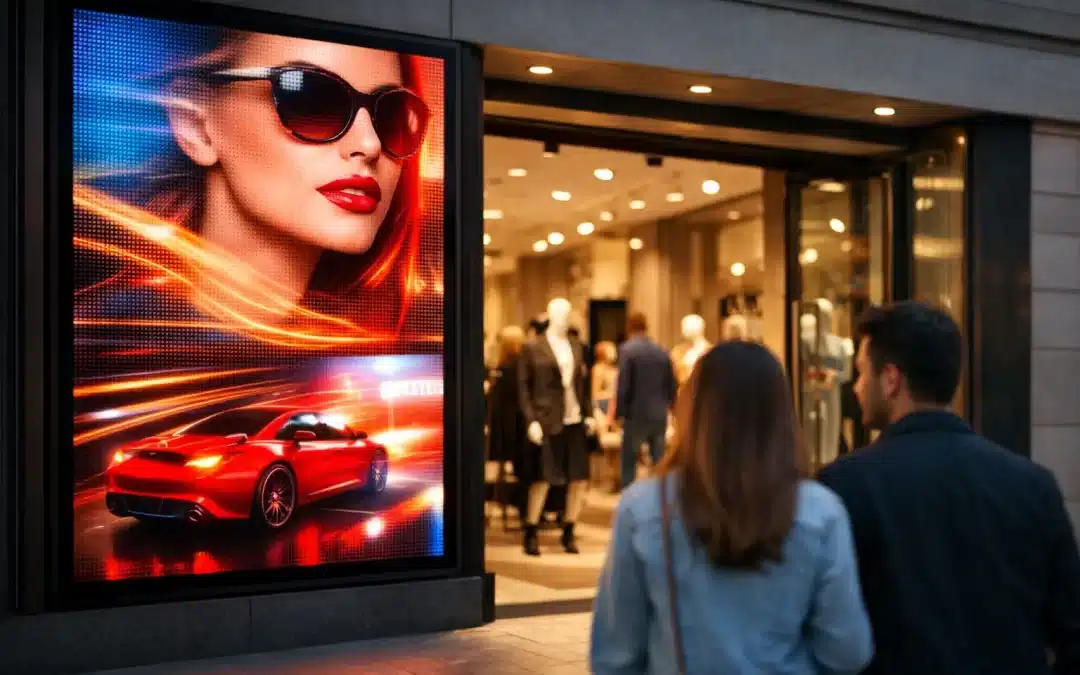
A dull window display costs more than most businesses realise. People walk past, glance once, and keep moving. LED display screens change that equation fast by putting bright, moving content where static signs and faded posters simply cannot compete.
For a retailer, venue, clinic or event organiser, that matters because visibility is often the first sale. If people do not notice you, they do not walk in. The right screen does not just look modern – it works harder, gets seen in real daylight, and gives you a practical way to promote offers, events, menus or brand messages without reprinting signage every other week.
Why LED display screens work so well
The big advantage is not just brightness, although that is a major part of it. LED display screens are built to grab attention in busy real-world settings where sunlight, reflections, traffic and visual clutter all compete for a customer’s eyes.
That makes them especially effective in shopfronts, hospitality venues, medical practices, sales offices, trade shows and event spaces. A bright screen facing the street can push a daily special, a limited-time offer or a simple brand message far more effectively than paper signage taped to glass. In an expo or activation setting, a large portable screen can help your stand look active and established, even before someone speaks to your team.
There is also a speed advantage. When your content lives in a cloud-based system, you can change promotions, pricing, event schedules or welcome messages in minutes. You are not waiting on a printer, replacing corflute signs, or asking staff to manually swap out posters. For businesses that move quickly, that flexibility is not a nice extra – it is part of staying relevant.
Choosing LED display screens for your space
This is where plenty of businesses get stuck. They know they want a screen, but they are not sure whether they need indoor, outdoor, portable or fixed signage. The answer depends on where the screen will live, what it needs to do, and how often the message changes.
Indoor LED display screens
Indoor screens suit reception areas, retail stores, gyms, pharmacies, showrooms and venues where controlled lighting makes standard brightness levels workable. They are ideal when you want polished visuals up close, whether that is product promos, wayfinding, branded content or menu boards.
The key question is viewing distance. A screen that looks sharp from two metres away may not be the right choice if your audience is standing right in front of it. Pixel pitch, size and mounting position all matter, which is why buying on price alone usually leads to disappointment.
Outdoor and window-facing screens
If the screen is competing with full daylight, brightness becomes non-negotiable. This is one of the most common mistakes businesses make. They buy a cheap screen that looks acceptable in a showroom, then discover it washes out in the front window by 10 am.
For storefront promotion, road-facing signage and outdoor installations, you need hardware designed to stay visible under harsh conditions. Weather resistance, heat handling and overall build quality matter as much as image quality. If the goal is to bring more customers in store, the screen has to perform when the sun is working against you.
Portable screens for events and promotions
Portable LED display screens are a strong fit for expos, pop-up activations, weddings, presentations and temporary campaigns. They make sense when you need impact without committing to a fixed install or when your display has to move between locations.
The trade-off is practical rather than visual. You want a unit that is quick to transport, simple to set up and easy for staff to run without turning every event into a technical exercise. Plug-and-play matters more than fancy features if your team is setting up under time pressure.
What businesses should look for before buying
A screen can look impressive in a brochure and still be the wrong commercial decision. The best buying decisions usually come down to a few practical factors.
Brightness should be near the top of the list, especially for windows and outdoor use. If the screen is not visible in the environment where it will operate, nothing else really matters.
Ease of content management matters just as much. Many businesses do not need a complicated software ecosystem. They need to upload content quickly, schedule campaigns, update messages remotely and move on with their day. If the platform is clunky or comes with nasty ongoing monthly costs, it becomes a burden instead of a tool.
Support is another factor that often gets overlooked until something goes wrong. Commercial signage is not a consumer television on a wall. You want local service, access to parts, warranty backup and someone who can actually answer the phone when you need help. That is especially important for businesses running promotions, events or high-traffic installations where downtime costs money.
Sales, hire or lease-to-own?
Not every business needs to buy outright, and that is one of the strengths of modern digital signage. The right acquisition model depends on how often you will use the screen and how quickly you want it to pay for itself.
Buying for long-term value
Outright purchase makes sense for businesses with a permanent site and regular promotional needs. If you run weekly specials, seasonal campaigns or brand content all year round, ownership usually gives the best long-term return. You control the asset, avoid rental repetition, and build the screen into your day-to-day marketing.
Hiring for short-term impact
For expos, product launches, conferences, school events and weddings, hire is often the smarter option. You get the visual impact when you need it without carrying the cost of a screen that sits in storage the rest of the year. It also removes the pressure of choosing a permanent setup before you know what works.
Lease-to-own for cash flow flexibility
Some businesses want the benefit of ownership without a large upfront spend. Lease-to-own can be a practical middle ground, especially for growing operators who want to improve visibility now and spread the cost over time. If the screen is expected to drive enquiries, foot traffic or upsells straight away, that can be a commercially sensible move.
Where LED display screens deliver the strongest return
The best results usually come from using the screen as an active sales tool rather than a passive decoration. Retailers can rotate offers based on time of day, stock levels or seasonal promotions. Cafes and restaurants can update menus and specials without wasting printed material. Medical and professional practices can reinforce services, promotions and trust-building messages in waiting areas and windows.
For events, the return often comes from perception as much as information. A bright, professional screen can make a brand stand look more credible, increase dwell time and help sponsors or key messages land properly in a crowded venue.
In high-traffic metro and coastal markets such as Brisbane, the Gold Coast, the Sunshine Coast and Sydney, visibility is a genuine commercial advantage. Busy streets and competitive retail strips reward businesses that stand out quickly.
Common mistakes that waste money
The first is underestimating brightness. The second is overcomplicating the setup. Businesses often get sold features they will never use, then end up with a system nobody in the team feels confident updating.
Another mistake is choosing a screen size without thinking about content. A large display with poor content will still underperform. Clear offers, bold visuals and simple messaging usually beat crowded layouts with too much text.
It is also worth being realistic about installation conditions. Window glare, mounting position, power access and viewing angles all affect performance. A quick demo with real content usually tells you more than a spec sheet ever will.
LED display screens are only as good as the plan behind them
The hardware matters, but results come from matching the screen to the job. A high-brightness window display for foot traffic, a portable screen for events, or a fixed indoor display for promotions all solve different problems. When the format fits the space and the content is easy to manage, the screen becomes a practical sales asset instead of an expensive decoration.
That is the real value. Good LED display screens do not just make a business look sharper. They help you stay visible, stay current and give people a reason to stop, look and walk through the door.
Recent Comments