
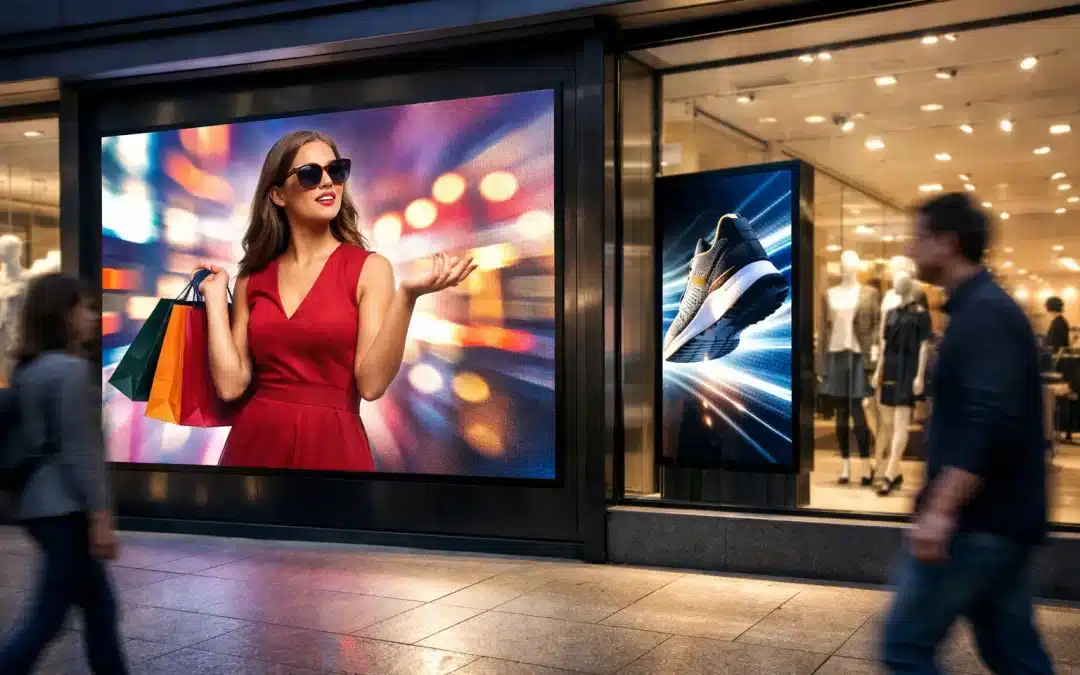
A shopfront screen has about three seconds to do its job. Someone walks past, glances up, and decides whether your business looks active, relevant and worth stepping into. That is why choosing the best screens for shopfronts is not really about buying a screen. It is about buying attention in a busy street, shopping centre or venue where every nearby business wants the same thing.
The right display can lift foot traffic, make promotions impossible to miss and give your shopfront a sharper, more current look. The wrong one becomes expensive background furniture – too dim in daylight, too complicated to update, or simply the wrong format for the space. If you want a screen that works in the real world, there are a few decisions that matter far more than the spec sheet alone.
What makes the best screens for shopfronts?
For most businesses, the best result comes from matching the screen to the viewing environment first, then to the content, then to the budget. Too many buyers do it the other way around.
Brightness is usually the biggest factor. A screen that looks brilliant in a showroom or office can disappear once it is sitting behind glass with sunlight hitting the window. If your shopfront gets direct sun, standard indoor panels rarely hold up. You need a commercial-grade ultra-bright display built for window-facing use. Without enough brightness, even excellent content loses.
The second factor is placement. A screen positioned too high, too low or at the wrong angle will never perform as well as one mounted with foot traffic patterns in mind. Passers-by do not stop and study your screen like they would a TV at home. They catch it in motion while walking. That means your message needs to be visible quickly and your display needs to sit where people naturally look.
Then there is content control. A lot of businesses want digital signage until they discover the software is clunky or comes with ongoing monthly fees that keep adding up. The best setup is one your team can update fast, without chasing an agency or calling tech support every time you want to swap a special, price point or event message.
The main screen types to consider
There is no single winner for every shopfront. The best screen depends on your frontage, budget, opening hours and how temporary or permanent the installation needs to be.
Window-facing ultra-bright LCD screens
For many retailers, medical clinics, hospitality venues and service businesses, this is the strongest all-round option. Ultra-bright window displays are designed to cut through ambient light and remain readable from outside during the day. If your goal is to promote offers, featured products, menu items or brand messages to passing traffic, this format gives you a clean, professional result without taking over the whole storefront.
They work especially well when you want a polished permanent installation. They are also a smart choice if your content changes regularly and you want remote control without operational headaches. The trade-off is that quality matters. Cheap consumer screens are a false economy in shopfront glass. They are not built for the heat, long run times or brightness demands of commercial use.
LED screens for maximum impact
If visibility is everything, LED can be the standout. Large-format LED screens are ideal for sites with heavy traffic, broad frontages or businesses that want to make a bold statement from a greater distance. They are highly effective for large promotions, brand loops and motion-heavy visuals.
That said, LED is not automatically the right answer for every storefront. Pixel pitch, viewing distance and budget all come into play. In a smaller frontage where people view the screen from close range, a high-resolution LCD may present cleaner detail for text-heavy content. LED shines when scale and impact are the priority.
Portable and battery-powered displays
These are worth considering if your shopfront activity changes often or you want signage that can move between indoor, outdoor and event use. Portable units are popular for pop-up activations, temporary promotions, expos, weddings and businesses that want flexibility without a fixed install.
For a permanent main shopfront display, a portable screen is not always the first choice. But as a secondary sign near an entrance, on the footpath where permitted, or for seasonal campaigns, it can be a very practical revenue-driving tool. Setup speed matters here. If it takes too long to wheel out and get running, staff will stop using it.
How to choose the right size and format
Bigger is not always better. The best size is the one that fits your viewing distance, window dimensions and content style.
If your shopfront is narrow and your audience passes close to the glass, a modest-sized display with strong brightness and clear creative can outperform an oversized screen crammed into the wrong spot. On the other hand, if you are set back from the street or dealing with fast-moving traffic, the screen needs enough scale to register at a glance.
Portrait screens are often excellent for shopfronts because they mirror the natural shape of posters and fit neatly in windows without blocking the whole frontage. They also suit vertical content like menus, promotions, before-and-after visuals and social-style creative. Landscape screens can work better when you need wide product imagery, video or multiple message zones.
The practical question is simple: what does a person see in the first second? If the answer is clutter, tiny text or poor contrast, the format needs work.
Brightness matters more than most buyers expect
This point deserves extra attention because it is where many storefront screens fail.
Behind-glass displays have to compete with daylight, reflections and changing conditions across the day. Morning sun, afternoon glare and night-time lighting all affect readability. A standard indoor panel may look acceptable at 9 am and washed out by midday. That is why brightness should never be treated as a nice extra for shopfronts. It is core performance.
The best screens for shopfronts are designed for high-brightness commercial use, not borrowed from a boardroom or lounge room category. They are built to run long hours, hold image quality and stay visible where it counts. If your screen cannot be read from outside, the rest of the feature list does not rescue the investment.
Content can make a great screen look average
Even the best hardware will underperform if the message is weak. Shopfront content needs to be fast, bold and commercially useful.
Think short offers, strong visuals and a clear call to action. A screen should not read like a brochure. Most people are moving, distracted or deciding between multiple stores in the same strip. Give them one message at a time. Sale now on. New menu. Open late. Book today. Fresh arrivals. That level of clarity wins far more often than trying to fit your entire business story into a single loop.
Motion helps, but only when it supports the message. Too much animation becomes noise. Clean transitions and readable text tend to perform better than flashy effects that look clever but communicate very little.
Don’t ignore the ownership model
This is another area where businesses can waste money without realising it. Some buyers need a permanent screen and should purchase outright. Others have seasonal peaks, short-term campaigns or event schedules that make hiring the smarter move. Lease-to-own can also suit businesses that want the display working now without tying up capital all at once.
There is no universal best option. It depends on cash flow, campaign timing and how often the screen will be used. What matters is choosing a setup that supports growth rather than creating ongoing friction. The same applies to software. If your signage platform comes with recurring fees and unnecessary complexity, the long-term cost can quietly overtake the hardware value. Practical systems with remote cloud control and no nasty ongoing monthly costs are usually the better fit for busy operators.
Service and support count more than buyers think
A shopfront screen is part of your sales engine. If it goes down, looks poor or becomes hard to update, the cost is not just technical. It affects foot traffic and presentation.
That is why local support matters, especially for businesses running permanent displays or time-sensitive promotions. Being able to get advice on the right model, see a live demo before committing and know parts, warranty and repairs are available makes the buying decision safer. It also reduces the chance of ending up with a screen that looked good online but is wrong for your site.
For businesses across Brisbane, the Sunshine Coast, the Gold Coast and Sydney, having access to responsive support can be the difference between a screen that gets used properly and one that becomes a headache.
So what are the best screens for shopfronts?
If you want the practical answer, the best choice for most fixed shopfronts is a commercial ultra-bright display sized correctly for the window and paired with simple remote content control. If your site needs maximum scale or long-distance visibility, LED may be the better fit. If you need flexibility for promotions, pop-ups or mixed-use environments, a portable or battery-powered display can be the smarter play.
The key is not chasing the fanciest option. It is choosing the screen that suits your frontage, stays visible in your lighting conditions, and makes content updates easy enough that your team actually uses it.
A good shopfront screen should do one thing really well – bring more customers in-store. If it can do that without complicated setup, recurring software pain or guesswork around support, you are on the right track.
Recent Comments