
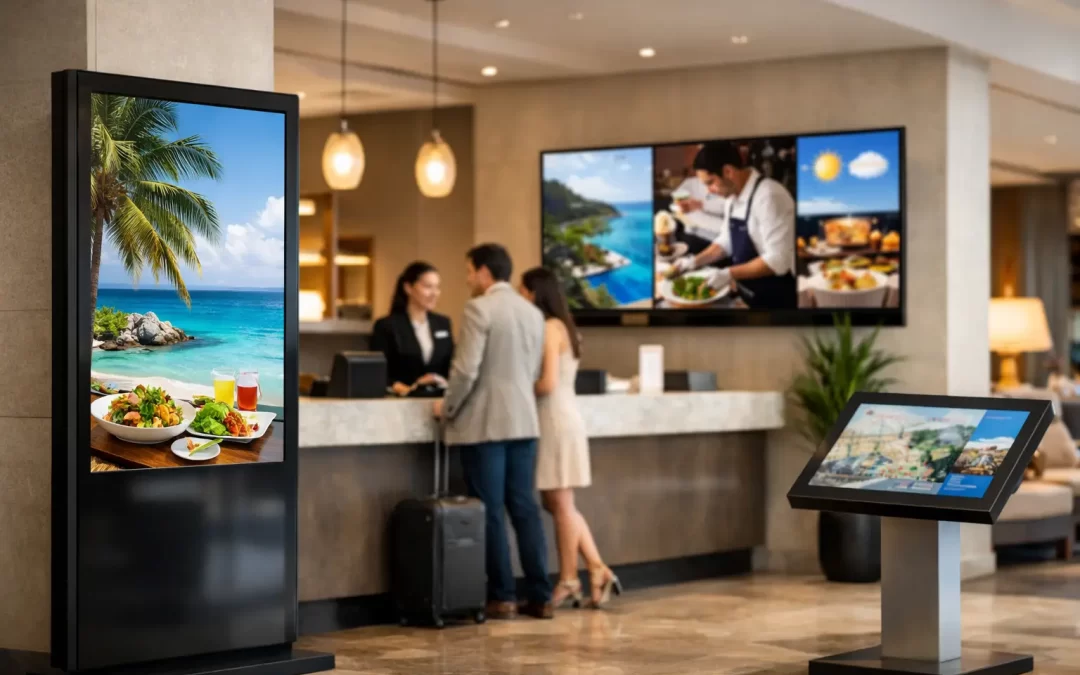
Friday knock-off drinks are about to start, your lunch special still has two hours to run, and tonight’s live music needs a push before the after-work crowd walks past. This is exactly where digital signage for hospitality venues earns its keep. When screens are bright, easy to update and built for real trading conditions, they do more than look good – they help bring more customers through the door and move people towards the offers that matter.
Hospitality runs on timing. A chalkboard or printed poster can do the job for a while, but it cannot keep up with shifting menus, last-minute events, weather-driven promos or changes in foot traffic. A digital display can. That matters whether you run a pub, cafe, hotel, bar, club, quick service venue or a function space trying to fill quiet periods and maximise busy ones.
Why digital signage for hospitality venues works
The biggest advantage is simple – relevance. A screen lets you put the right message in front of the right person at the right time. Breakfast can roll into lunch, lunch can turn into happy hour, and happy hour can shift into entertainment promos without anyone climbing a ladder or dragging out a marker pen.
That flexibility has a direct commercial upside. Venues can promote high-margin items, push limited-time specials, showcase upcoming events and highlight booking options while customers are already in decision mode. If someone is standing at the bar or waiting near the host desk, your screen has a few seconds to influence what they order, where they sit or whether they come back on the weekend. Static signage rarely gets that job done as well.
There is also a brand perception piece that owners sometimes overlook. Crisp, high-brightness displays make a venue feel current and active. That does not mean every pub needs to look like a nightclub, or every cafe needs a wall of flashing graphics. It means the venue appears organised, switched on and commercially sharp. For customers comparing where to stop, those small signals matter.
Where hospitality venues get the best results
Placement does a lot of the heavy lifting. Street-facing window displays are often the first win because they target passing foot traffic. If your venue sits on a busy road, in a dining precinct or near a shopping strip, an ultra-bright screen can cut through glare and stay visible in full daylight. That is the difference between a display that looks impressive in a showroom and one that actually works at 1 pm on a sunny afternoon.
Inside the venue, different screens can do different jobs. A menu board above the counter speeds up ordering. A display near the bar can rotate drinks specials, upcoming sport or entertainment. A screen in a hotel lobby can direct guests to check-in, restaurants, function rooms or special packages. In event spaces, portable LED screens can add value for weddings, conferences, launches and seasonal activations without locking you into a permanent setup.
The key is to match the screen format to the space and the commercial goal. Bigger is not always better. A compact battery-powered unit near the entrance might outperform a large indoor screen tucked too far back. Likewise, an outdoor display may be essential for some venues and unnecessary for others. It depends on sightlines, ambient light, viewing distance and what you want the screen to do.
What to look for in digital signage for hospitality venues
Hospitality is not a gentle environment. Screens deal with long operating hours, changing light conditions, fast content changes and staff who need things to work without fuss. That is why commercial-grade hardware matters. Consumer TVs can seem cheaper upfront, but they are usually the wrong fit for bright shopfronts, daily use and business-critical messaging.
Brightness should be high on your checklist. If a screen washes out in daylight, it stops being a sales tool and turns into background furniture. For street-facing applications especially, ultra-bright displays are what keep promotions visible when the sun is working against you.
Ease of content control matters just as much. If changing a promo takes too long, staff will stop using the system properly. Cloud-based management makes sense for venues because it allows fast updates across one screen or multiple sites without unnecessary complexity. It is even better when there are no nasty ongoing monthly software costs chewing into your margin.
Setup is another practical issue. Most venue owners do not want a drawn-out install process or a system that needs constant technical babysitting. Plug-and-play solutions save time, reduce disruption and make it easier for staff to stay on top of content. Good local support also counts. When something needs servicing, warranty help or a quick answer, you want a team that responds fast and knows the hardware.
Content that actually drives sales
A great screen with poor content will still underperform. Hospitality signage works best when the message is clear, visual and tied to a specific action. Show the dish. Show the drink. Show the event date. Show the deal. Then make the next step obvious.
Too many venues try to cram a whole website onto one screen. Customers walking past do not read paragraphs. They scan. That means bold offers, simple pricing, strong images and short calls to action perform better than cluttered layouts. If your parmi night starts at 5 pm, say it clearly. If cocktails are two-for-one until 6 pm, make that the hero message.
Freshness matters as well. A screen should reflect what is happening now and what is happening next. Rotate content by daypart, events calendar and season. Summer spritz promos, footy finals, Mother’s Day bookings, Sunday sessions, EOFY functions – each one is a chance to keep the display commercially relevant.
That said, not every venue needs constant animation and rapid transitions. Fast-moving content can feel cheap or distracting in the wrong setting. A premium hotel bar may benefit from restrained, polished visuals. A sports bar can lean more promotional and energetic. The right style depends on the customer experience you are trying to create.
Hire, buy or lease-to-own?
This is where many operators get stuck, and fair enough. The right option depends on budget, campaign length and how certain you are about long-term use.
Buying makes sense for permanent installations where signage is part of daily operations. If you know the screen will be used every week for menus, promotions or venue branding, ownership usually gives the best long-term value.
Hiring suits short-term events, seasonal campaigns, venue launches and one-off activations. It gives you impact without a large upfront commitment. That is especially useful for hospitality groups testing new locations, running pop-ups or adding temporary displays for major events.
Lease-to-own sits in the middle. For businesses that want the benefits of a commercial display without paying everything upfront, it can be a practical way to spread cost while still building towards ownership. The important thing is choosing a setup that fits your trading reality rather than chasing the cheapest sticker price.
The common mistakes venues make
The first mistake is underestimating brightness. Many venues only realise this after installation, when the screen looks fine at night but disappears during the day. The second is choosing the wrong size or placement. A poorly positioned screen cannot fix itself with better content.
Another issue is overcomplicating the system. If staff need training every time they want to change a promotion, updates will be inconsistent. And if software fees keep stacking up month after month, the return starts to look weaker than it should.
The better approach is practical from the start. See a live demo. Check visibility in realistic conditions. Make sure content updates are easy. Confirm what service, parts and repairs look like after purchase. A signage supplier should help you avoid expensive guesswork, not add to it.
For venues across Brisbane, the Sunshine Coast, Gold Coast and Sydney, local support can make a real difference because issues get resolved faster and advice is grounded in the conditions your display will actually face.
Hospitality never stands still, and your signage should not either. The right screen setup gives you a faster way to promote, respond and sell – without adding friction to the day-to-day. If it helps more people notice your venue, order one more round or book the next event, it is doing exactly what it should.
Recent Comments