
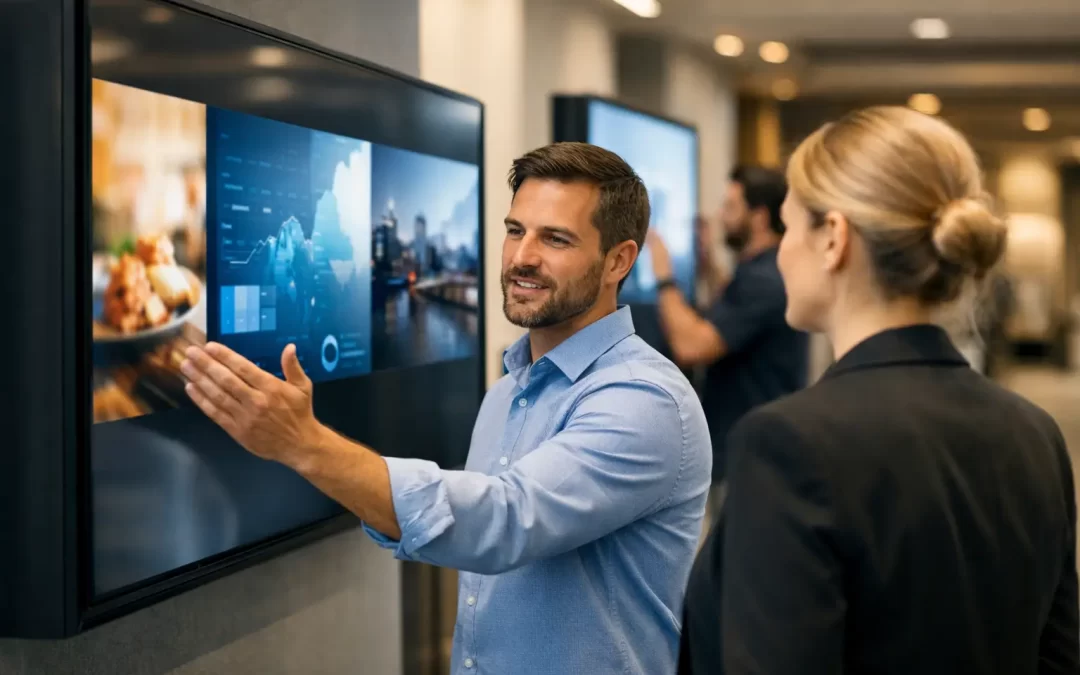
A screen can look impressive in a showroom and still fail the moment it hits a sunny shopfront, a busy expo floor or a fast-moving venue. That is exactly why digital signage specialists matter. They do more than supply a screen – they help you choose the right format, brightness, placement and content setup so your display actually gets seen and starts pulling its weight.
For most businesses, the real issue is not whether digital signage works. It does. The issue is whether you end up with signage that suits your space, your staff and your commercial goals. A café trying to promote lunch specials has different needs from a retailer chasing foot traffic, or an event organiser needing a portable LED screen that can be set up quickly and packed down just as fast. Getting that decision wrong can cost time, money and momentum.
What digital signage specialists actually do
A good specialist is not there to throw technical jargon at you or push the biggest screen in the catalogue. Their job is to make the buying decision easier and the result more profitable. That starts with understanding what you need the display to do. Are you trying to stop passers-by, showcase products, direct guests, promote limited-time offers or create impact at an event? The answer shapes everything else.
From there, the practical questions matter. Will the screen sit indoors or outdoors? Does it need to compete with direct sunlight? Is it staying in one location or moving between sites? Does your team need to update content remotely? Do you want to buy outright, hire for a campaign or spread the cost with a lease-to-own option? These are not minor details. They are the difference between signage that gets used properly and signage that becomes expensive furniture.
The best specialists also reduce friction after the sale. They think about setup time, content management, warranty support, spare parts and repairs before problems show up. That matters if you are running a busy business and do not have hours to waste troubleshooting a display that should have been straightforward from day one.
Why off-the-shelf screens often fall short
Plenty of businesses start by looking at consumer-grade screens because they appear cheaper upfront. On paper, that can feel like a smart move. In practice, it often leads to poor visibility, shorter lifespan and awkward content control.
Commercial signage has to perform in real operating conditions. Bright retail windows, outdoor forecourts, receptions with all-day use and event spaces with constant movement all place different demands on the hardware. A standard TV might be fine in a lounge room, but that does not mean it will handle all-day commercial use or stay visible under harsh light.
There is also the software issue. Some systems look affordable until monthly platform fees start stacking up. If you are managing multiple screens or planning to use signage long term, recurring costs can eat into return on investment faster than expected. Businesses usually want something simpler: easy remote updates, reliable control and no nasty ongoing monthly costs if they can avoid them.
Digital signage specialists help you match the screen to the job
This is where experience pays off. Specialists can look at your environment and tell you whether you need an ultra-bright window display, a battery-powered portable unit, a fixed indoor screen or a large-format LED solution. They can also be honest about trade-offs.
For example, a portable display is excellent for flexibility, pop-up promotions and events, but it may not be the best fit for a permanent high-traffic storefront where a fixed installation offers more size and presence. An outdoor unit gives you weather resistance and visibility, but if your display is fully under cover, an indoor commercial screen may be the more cost-effective option.
That nuance matters because the right answer depends on how the screen will actually be used. Business owners do not need more options for the sake of it. They need fewer mistakes.
Brightness is not a feature – it is the whole game
If people cannot see your screen clearly, nothing else matters. Content quality, animation and promotions all become irrelevant if glare washes the display out by 10 am.
That is why brightness is one of the first things a specialist should talk about, especially for window-facing and outdoor applications. LED Video Displays are built to cut through sunlight and keep your message visible from the street. For retailers, hospitality venues and medical practices, that can make the difference between being noticed and being ignored.
A brighter screen is not always required, and a good provider will say so when it is not. But for many customer-facing businesses, visibility is the whole point of the investment. The display should work in your actual environment, not just in ideal conditions.
Content control should be simple enough for real teams
Many businesses delay digital signage because they assume updating content will be complicated. That concern is fair. If changing a promotion requires technical support or too many steps, staff stop using the system properly.
Digital signage specialists should solve that problem, not create it. Cloud-based content control is valuable because it allows you to change offers, schedules and messages remotely without standing in front of each screen with a USB. For multi-site businesses, that can save serious time. For event organisers, it means content can be adjusted quickly as sponsors, schedules or branding requirements change.
The key is usability. A strong system should let your team update content without needing an IT department. Fast setup and plug-and-play operation are not just nice extras. They are part of whether the display gets used consistently enough to deliver results.
Buying is not the only option
One of the biggest misconceptions in this market is that every business should purchase signage outright. Sometimes that makes sense, particularly for permanent installations where the screen will be in use every day. But not every need is permanent.
Hire can be the smart choice for expos, seasonal campaigns, product launches, weddings, conferences and short-term activations. It gives you impact without locking capital into equipment you only need for a few days or weeks. Lease-to-own can also suit businesses that want the benefit of ownership without the upfront hit to cash flow. And with Displays starting from just $19+GST per week we have something to suit all businesses.
A practical provider will not force every customer into the same model. They will look at how often you plan to use the signage, how critical it is to daily operations and what level of flexibility you need. That commercial mindset is part of what separates specialists from general suppliers.
Local support is worth more than it looks on paper
When a screen is central to your promotion, your event or your store visibility, support matters. Not vague support. Real support – local service, clear warranty backing, available parts and repairs, and people who answer the phone when something needs attention.
This is one area buyers often underestimate until something goes wrong. The cheapest quote can become expensive quickly if there is no meaningful backup behind the hardware. For businesses that rely on signage to attract customers, downtime is not just annoying. It has a sales cost.
That is why live demos are also valuable. Seeing the display in action helps you judge brightness, clarity and ease of use before you commit. It removes guesswork, and for many buyers, that confidence is worth a lot.
When to bring in digital signage specialists
If you are opening a new location, refreshing a tired storefront, planning an event activation or trying to lift walk-in traffic, it is worth speaking with specialists early rather than after a rushed purchase. The same applies if you already have a screen that is underperforming. Often the issue is not digital signage itself. It is the wrong screen, the wrong placement or a setup that is too hard to manage.
Businesses that get the best results usually treat signage as a revenue tool, not a box-ticking exercise. They want a display that is visible, durable and easy to control, with acquisition options that suit the way they operate. That is the space where experienced providers such as Video Display stand out – practical advice, high-brightness hardware, simple content management and flexible options for buying, hiring or working towards ownership.
The right screen should make your business easier to notice and easier to promote. If it takes too much effort to run, costs too much to maintain or disappears in daylight, it is not doing its job. The smart move is to choose signage that works where your customers actually see it.